
Facilitation is critical tool and skill to have, as employers and society face bigger and more complex problems and ideas. However, facilitation is never an easy task. It requires a certain level of facilitation skills which can be enhanced by mastering the use of Workshop Facilitation Techniques.
Using a variety of techniques will help people engage fully in workshops and meetings. In organizations, workshops and meetings are normally undertaken to discuss and address problems and issues while, at the same time, intended to come up with the best ideas and solutions. This can only be achieved when we get to involve more people. But when people vary in things like how we take in information most easily, whether we prefer to speak in large groups or small ones, how much reflection time is needed to make up our minds, this calls for a range of different activities that will engage people to be active generators of ideas, information, and solutions.
Facilitation techniques become an essential tool for workshop leaders to facilitate workshops such as Design Planning Sessions, Joint Requirements Planning Workshop or Strategic Planning Workshops. Various techniques must be employed to accelerate the capture of planning, analysis, and design information, as well as ensure that participants work effectively together. Failure to effectively harness the knowledge of participants and manage participant behavior can lead to inability to accomplish a set of pre-defined objectives that can hamper organizational effectiveness.
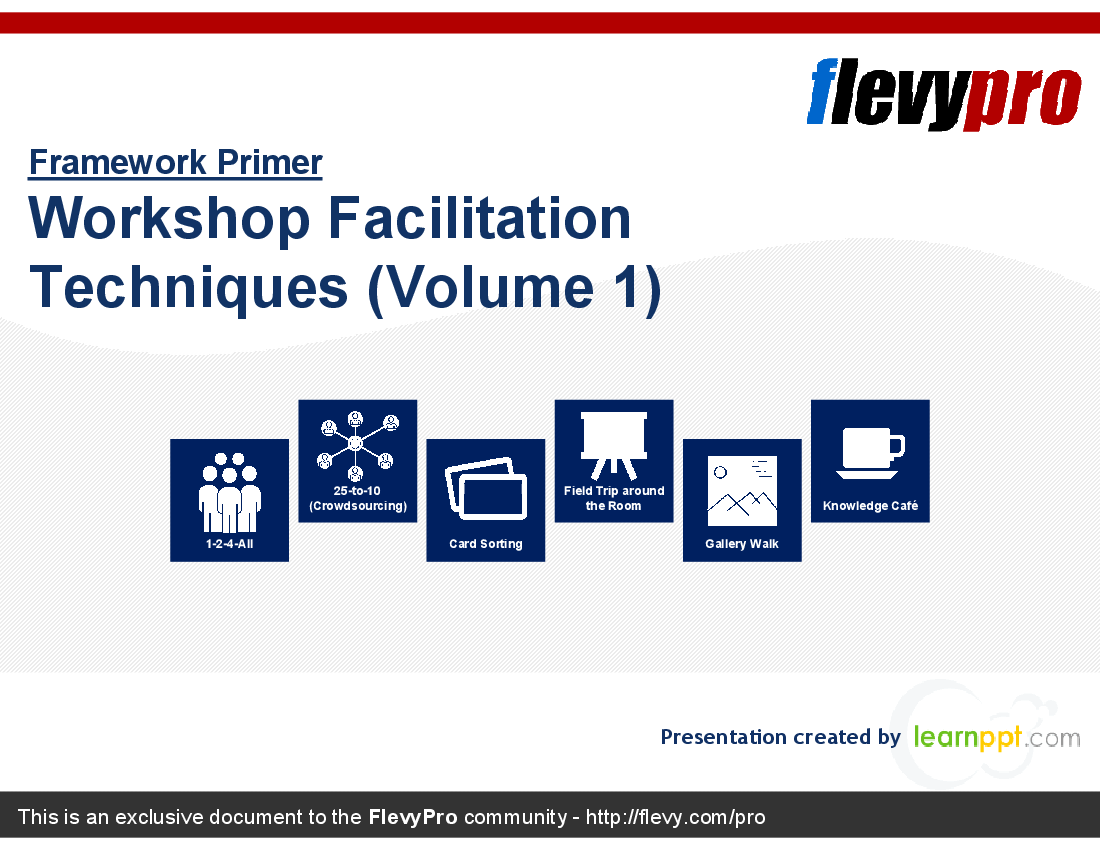
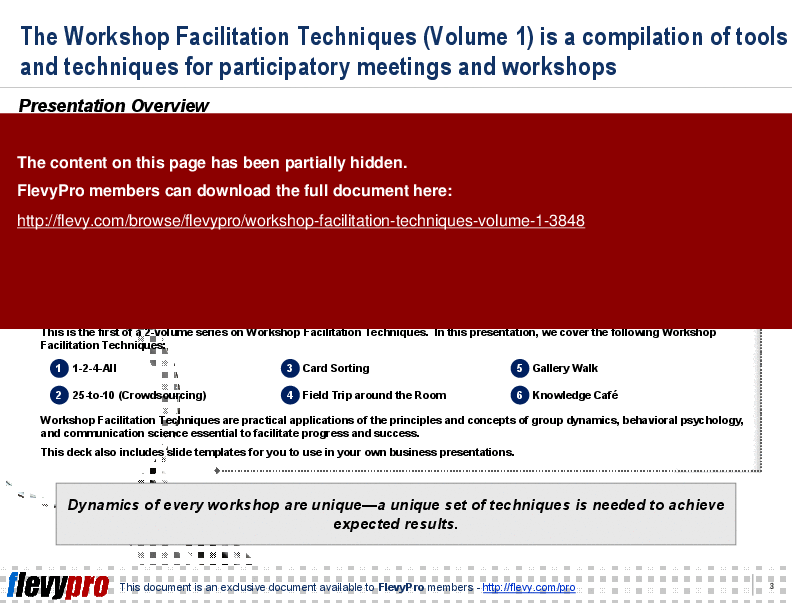
This is the first of a 2-volume series on Workshop Facilitation Techniques. In this presentation, we cover the following Workshop Facilitation Techniques:
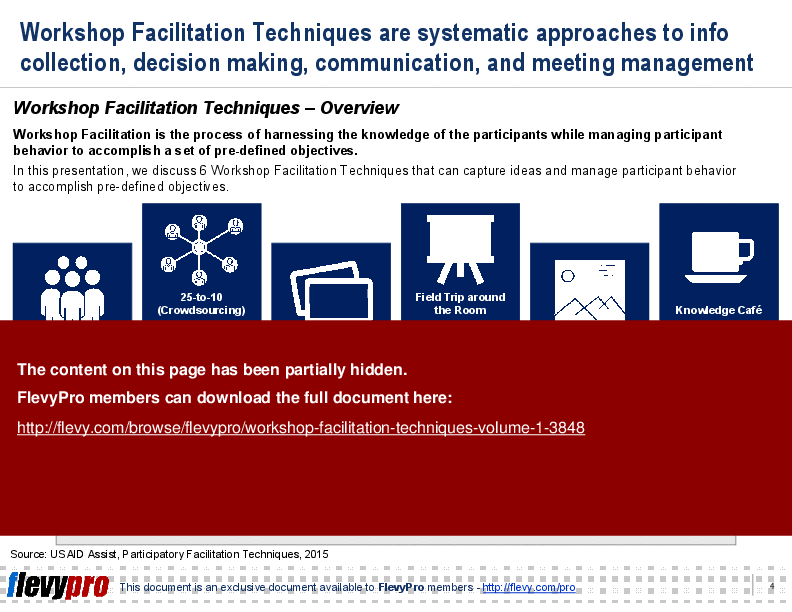
1. 1-2-4-All
2. 25-to-10 (Crowdsourcing)
3. Card Sorting
4. Field Trip around the Room
5. Gallery Walk
6. Knowledge Café
Workshop Facilitation Techniques are practical applications of the principles and concepts of group dynamics, behavioral psychology, and communication science essential to facilitate progress and success.
This deck also includes slide templates for you to use in your own business presentations.
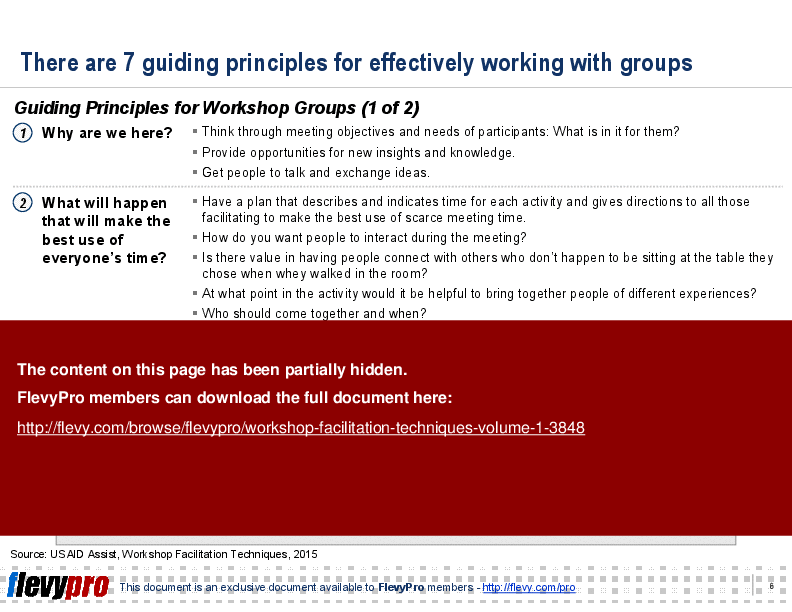
This presentation delves into guiding principles for effectively working with groups, ensuring optimal use of time and resources. It also outlines the roles and responsibilities of a Knowledge Café host, crucial for successful facilitation.
Got a question about this document? Email us at flevypro@flevy.com.
Executive Summary
The "Workshop Facilitation Techniques (Volume 1)" presentation provides a comprehensive guide to effective facilitation methods designed to enhance participant engagement and drive successful outcomes in workshops. Developed by experienced facilitators, this resource is tailored for leaders and facilitators aiming to navigate complex discussions and foster collaborative environments. By mastering these techniques, users can effectively harness group dynamics, ensuring that all voices are heard and that the best ideas emerge. This deck serves as a foundational tool for conducting participatory meetings, offering practical applications and templates for immediate use.
Who This Is For and When to Use
• Corporate leaders seeking to improve team collaboration and decision-making processes
• Workshop facilitators looking to enhance their skills in managing group dynamics
• Project managers aiming to drive effective outcomes in planning and strategy sessions
• HR professionals conducting training and development workshops
Best-fit moments to use this deck:
• During strategic planning sessions to facilitate open discussions
• In team-building workshops to foster collaboration and idea generation
• When addressing complex organizational challenges that require diverse input
• For training sessions focused on enhancing facilitation skills among team members
Learning Objectives
• Define key workshop facilitation techniques and their applications
• Build effective agendas that promote participant engagement
• Establish methods for integrating diverse ideas into actionable plans
• Create an inclusive environment that encourages open dialogue
• Identify and manage group dynamics to achieve desired outcomes
• Utilize templates and tools to streamline workshop facilitation
Table of Contents
• Overview (page 3)
• Guiding Principles (page 6)
• Workshop Facilitation Techniques (page 9)
• Templates (page 23)
Primary Topics Covered
• Overview of Workshop Facilitation - Introduction to the importance of facilitation in achieving workshop objectives and enhancing participant engagement.
• Guiding Principles - Essential principles that underpin effective facilitation, including setting objectives and fostering open communication.
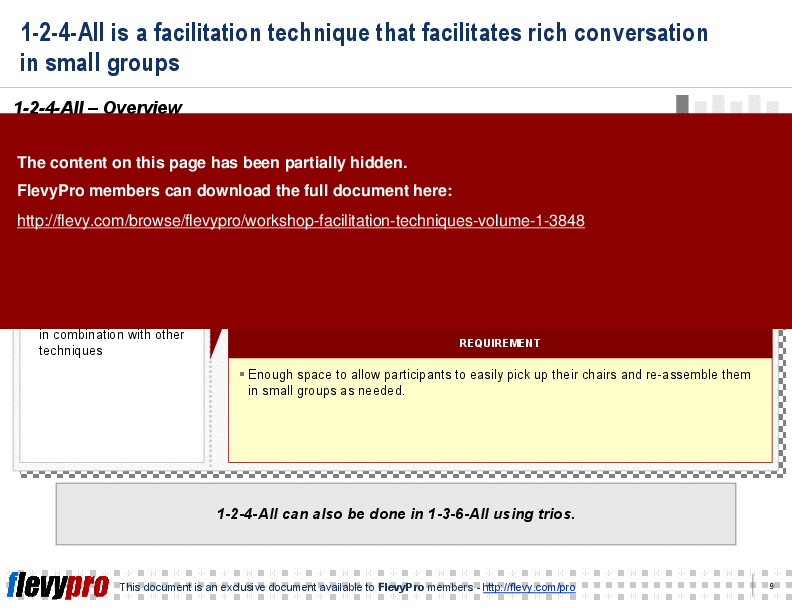
• 1-2-4-All Technique - A method for facilitating rich conversations in small groups, integrating ideas around key questions.
• 25-to-10 (Crowdsourcing) - A technique for rapidly generating and rating bold ideas from participants.
• Card Sorting - A method for organizing and categorizing ideas to draw on the collective knowledge of the group.
• Field Trip around the Room - An engaging approach for discussing multiple topics through small group conversations.
• Gallery Walk - A dynamic technique that encourages participants to explore and reflect on group-generated ideas.
• Knowledge Café - A structured method for facilitating conversations that build on participants' insights and foster collaborative learning.
Deliverables, Templates, and Tools
• Workshop agenda templates for structured facilitation
• Facilitation checklists to ensure all key elements are covered
• Visual aids for each facilitation technique to enhance understanding
• Feedback forms to gather participant insights post-workshop
• Action planning templates to translate discussions into concrete steps
Slide Highlights
• Overview slide detailing the importance of facilitation techniques
• Guiding principles slide emphasizing the need for clear objectives and participant engagement
• Step-by-step breakdown of the 1-2-4-All technique for effective group discussions
• Visual representation of the 25-to-10 crowdsourcing process for idea generation
• Example of a Gallery Walk setup to facilitate active participation
Potential Workshop Agenda
Introduction and Overview (30 minutes)
• Present the objectives of the workshop
• Introduce the facilitation techniques to be covered
1-2-4-All Activity (45 minutes)
• Facilitate discussions in small groups
• Integrate ideas into a larger group conversation
Gallery Walk (30 minutes)
• Participants explore and reflect on group-generated ideas
• Gather feedback and insights
Knowledge Café (60 minutes)
• Conduct table discussions on predetermined questions
• Summarize key insights and themes from each table
Customization Guidance
• Adjust the workshop agenda to fit the specific needs and objectives of your group
• Tailor facilitation techniques to align with the participants' familiarity and comfort levels
• Incorporate relevant organizational terminology and context into discussions
• Modify templates to reflect specific goals and desired outcomes for the workshop
Secondary Topics Covered
• Techniques for managing difficult conversations in workshops
• Strategies for ensuring inclusivity and participation from all attendees
• Methods for evaluating workshop effectiveness and participant satisfaction
• Tips for leveraging technology in facilitation
Topic FAQ
Document FAQ
These are questions addressed within this presentation.
What are Workshop Facilitation Techniques?
Workshop Facilitation Techniques are structured methods used to guide discussions, engage participants, and achieve specific objectives during meetings and workshops.
How can I apply these techniques in my organization?
These techniques can be integrated into various organizational settings, including strategic planning sessions, team-building activities, and training workshops, to enhance collaboration and idea generation.
What is the 1-2-4-All technique?
The 1-2-4-All technique is a facilitation method that encourages participants to reflect individually, discuss in pairs, and then share insights with the larger group, fostering rich conversations and idea integration.
How does the 25-to-10 technique work?
The 25-to-10 technique involves participants generating bold ideas on index cards, rating them, and then discussing the highest-scoring ideas in a collaborative setting.
What is a Knowledge Café?
A Knowledge Café is a structured conversation format that allows participants to move between tables and discuss various topics, building on each other's insights and fostering collective intelligence.
Can these techniques be customized for different audiences?
Yes, these techniques can be tailored to suit different audiences by adjusting the complexity of the topics, the format of discussions, and the level of participant engagement required.
How do I measure the success of a workshop using these techniques?
Success can be measured through participant feedback, the achievement of workshop objectives, and the quality of ideas generated during discussions.
What resources are available to support the implementation of these techniques?
The presentation includes templates, checklists, and visual aids to assist facilitators in effectively applying these techniques in their workshops.
Glossary
• Facilitation - The process of guiding a group to achieve its objectives through structured discussions and activities.
• Workshop - A meeting or series of meetings focused on a specific topic, aimed at generating ideas or solutions.
• Group Dynamics - The interactions and behaviors that occur within a group setting.
• Engagement - The level of participation and involvement of individuals in a discussion or activity.
• Action Agenda - A list of tasks or objectives to be accomplished during a workshop.
• Synthesis - The process of combining different ideas or insights into a cohesive understanding.
• Reflection - The act of thinking critically about one's experiences and insights gained during discussions.
• Participant Input - Contributions made by individuals during discussions or activities.
• Collaboration - Working together towards a common goal or objective.
• Inclusive Environment - A setting that encourages participation from all individuals, regardless of their background or experience.
• Templates - Pre-designed formats or structures that can be used to facilitate discussions or organize information.
• Feedback Forms - Tools used to gather participant opinions and insights after a workshop.
Source: Best Practices in Workshop, Facilitation PowerPoint Slides: Workshop Facilitation Techniques (Volume 1) PowerPoint (PPT) Presentation Slide Deck, LearnPPT Consulting
Did you need more documents?
Consider a FlevyPro subscription from $39/month. View plans here.
For $10.00 more, you can download this document plus 2 more FlevyPro documents. That's just $13 each.
This document is available as part of the following discounted bundle(s):
Save %!
Facilitation Essentials
This bundle contains 4 total documents. See all the documents to the right.

|
Download our FREE Organization, Change, & Culture, Templates
Download our free compilation of 50+ slides and templates on Organizational Design, Change Management, and Corporate Culture. Methodologies include ADKAR, Burke-Litwin Change Model, McKinsey 7-S, Competing Values Framework, etc. |